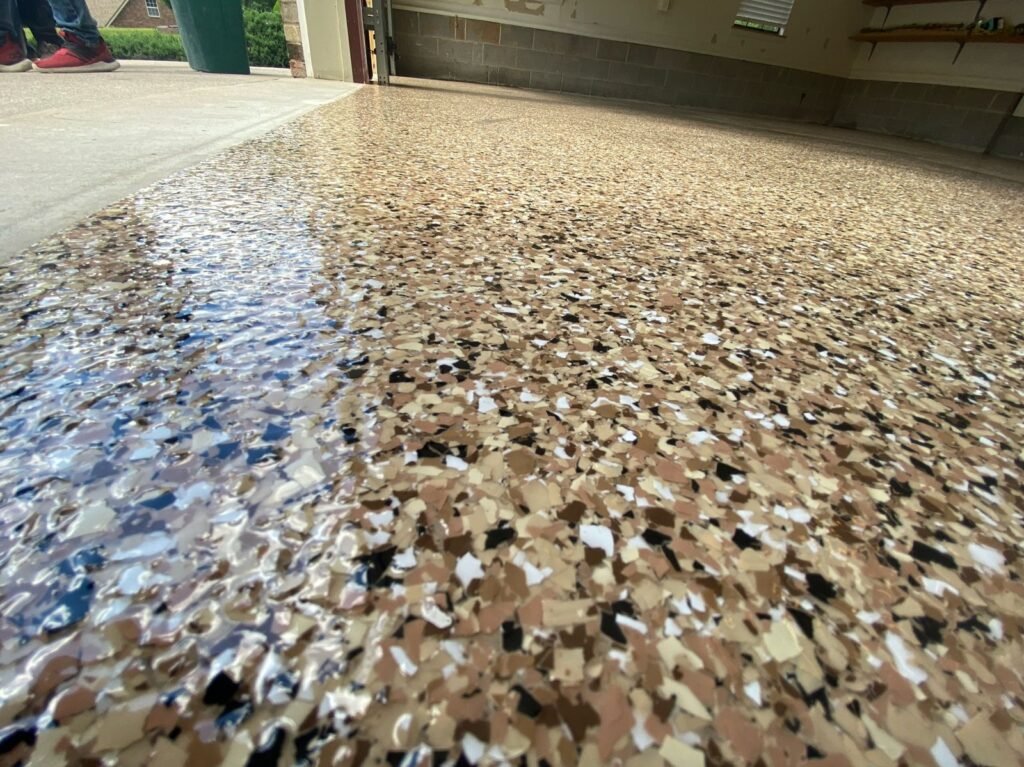
If you are trying to choose between polyurea and epoxy for your concrete floors, the difference comes down to how well the coating holds up over time. Polyurea gives you a tougher, longer-lasting surface that installs faster and performs better in real conditions.
In Ohio, where floors deal with moisture, temperature swings, and road salt, that difference matters. A polyurea system bonds stronger, resists damage, and keeps its appearance for years without peeling, cracking, or fading.
Polyurea vs Epoxy Garage Floor Coatings: Key Differences
At first glance, both coatings can look similar. The real difference shows up after months or years of use.
Polyurea coatings:
- Installed in one day
- Flexible, so they do not crack easily
- Strong bond to concrete
- UV stable with a polyaspartic top coat
- Designed for long-term performance
Epoxy coatings:
- Take several days to install
- Become brittle over time
- More likely to peel or lift
- Can turn yellow with sunlight exposure
- Tend to wear out faster
What looks good on day one does not always last.
Stronger and More Durable Coating Performance
Your floor takes more abuse than you think. Tires, tools, foot traffic, and everyday use all add up.
Polyurea is built to handle that. It absorbs impact and resists wear without breaking down.
Epoxy, on the other hand, can chip or wear thin over time. Once that happens, the damage only gets worse.
With polyurea, you get:
- Better impact resistance
- Stronger protection against wear
- A surface that holds up under daily use
Faster Installation and Cure Time
One of the biggest advantages of polyurea is how quickly everything gets done.
A professional system can be:
- Installed in one day
- Ready for light use within hours
- Back to full use much faster
Epoxy usually takes multiple days, which means more waiting and more disruption.
You get a durable floor without putting your space on hold.
Better Flexibility and Adhesion in Ohio Conditions
Concrete naturally expands and contracts, especially with Ohio’s changing temperatures.
Epoxy is rigid, so it struggles to keep up with that movement. That is when cracks and peeling start.
Polyurea is flexible. It moves with the concrete instead of against it.
That leads to:
- Fewer cracks
- A stronger, longer-lasting bond
- Better overall performance
No Yellowing or UV Damage
If your garage gets any sunlight, this matters.
Epoxy coatings tend to yellow over time, which changes the look of your floor.
Polyurea systems with a polyaspartic top coat are UV stable, so they keep their color.
You get:
- A consistent finish
- No fading or discoloration
- A clean look that lasts
Longer Lifespan and Better Long-Term Value
Epoxy might seem like a simpler option at first, but it often needs repairs sooner than expected.
Polyurea is built to last, which means fewer issues down the road.
You can expect:
- A longer lifespan
- Less maintenance
- Fewer repairs over time
Choosing the right system now saves you from problems later.
Resistance to Chemicals, Moisture, and Wear
Garage floors deal with more than just traffic. Oil, salt, and moisture are constant factors in Ohio.
Epoxy can struggle in these conditions and break down over time.
Polyurea holds up much better and protects the concrete underneath.
It offers:
- Strong resistance to chemicals
- Better handling of moisture
- Protection against surface damage
Why Professional Installation Matters
Even the best coating will fail if it is not installed the right way.
A proper installation includes:
- Mechanical surface preparation
- Repairing and profiling the concrete
- Checking for moisture issues
Most coating problems come from poor prep work, not the coating itself.
Frequently Asked Questions
Is polyurea better than epoxy for garage floors?
Yes. Polyurea is more flexible, bonds better, and holds up longer under daily use.
How long does polyurea last compared to epoxy?
Polyurea typically lasts much longer, especially in high-traffic areas.
Can polyurea handle Ohio weather?
Yes. It performs well in temperature changes, moisture, and exposure to road salt.
Is polyurea more expensive than epoxy?
It can cost more upfront, but it usually saves money over time because it lasts longer and needs fewer repairs.